

FPV drones have become an integral part of modern technology. They are actively used in the military sector, industry, sports, aerial filming, and engineering work. At the same time, the quality of components for FPV drones directly affects the characteristics, lifespan, and operational stability of the finished system. Geometric precision, material properties, and repeatability of parameters during mass production are especially critical.
UDC manufactures drone components in Ukraine, including FPV propellers and carbon frames of various frame sizes. The production cycle combines engineering design, prototyping, machining, polymer injection molding, and finished product quality control.
What FPV Components Include
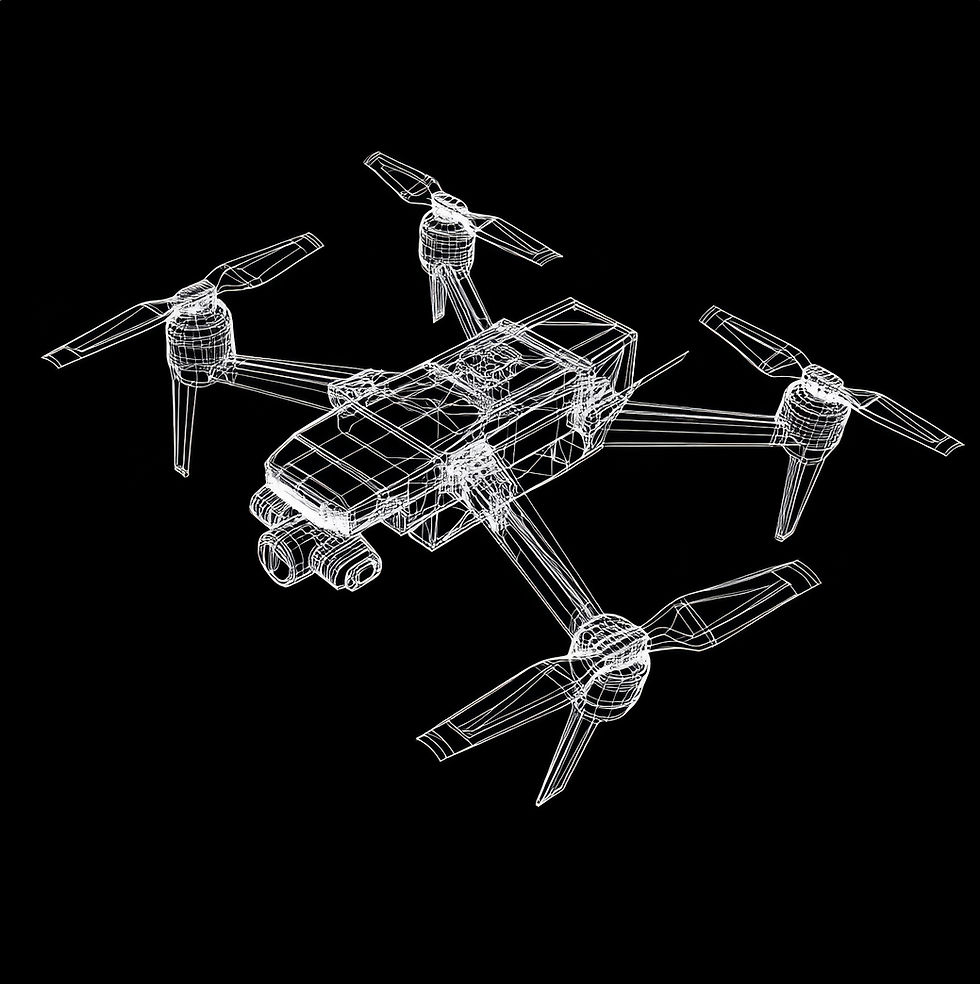
An FPV drone structure consists of dozens of elements, each performing its own specific function.
The main components are:
Carbon frame;
Brushless motors;
Electronic Speed Controllers (ESC);
Flight Controller (FC);
Video Transmitter (VTX);
FPV camera;
Propellers;
Antennas;
GPS modules;
Power systems and batteries;
Wires, connectors, and mounting accessories.
The high quality of each component directly impacts the flight performance of the UAV. UDC specializes primarily in its own in-house production of propellers and carbon frames, while other FPV system components are selected according to the configuration of a specific drone.
FPV Component Manufacturing: Main Stages
The production of FPV components combines modern engineering solutions, high-precision equipment, and strict quality control. Depending on the type of parts, the manufacturing process can vary significantly, but generally consists of several key stages.
Engineering Design
Every component begins with a digital model. Engineers create CAD drawings, simulate structural loads, and perform computer-aided structural analysis.
Special attention is paid to:
Product weight;
Strength;
Aerodynamics;
Ease of assembly;
Maintainability and repairability.
Manufacturing of Carbon Frames
Carbon fiber remains one of the best materials for FPV drones due to its high strength and low weight. After design, carbon sheets are processed on CNC machines in accordance with the digital model. Plates, arms, and other frame elements are cut out, after which geometry, mounting holes, and edge finishing quality are inspected. After this, the parts undergo grinding, geometric inspection, and preparation for assembly.
UDC manufactures carbon frames for FPV drones of various frame sizes. In-house production allows full control over part geometry and enables structure adaptation for specific configurations. View Carbon Frames.
Propeller Manufacturing
Propellers for FPV are one of the key elements of a drone's propulsion system. Their operation is influenced by diameter, pitch, blade count, profile geometry, and material. Their geometry determines thrust, controllability, vibration levels, and energy efficiency. For mass production, UDC utilizes engineering polymer materials, particularly glass-reinforced nylon. Propellers are manufactured using high-pressure injection molding in custom molds. During production, blade geometry, propeller balancing, molding quality, and parameter consistency across production batches are strictly controlled. View Propellers for FPV.
What Materials Are Used
Materials are selected based on the specific application of each component. In UDC's production, the primary materials are:
Carbon fiber;
Aviation-grade aluminum;
Fiberglass laminate (FR-4/G10);
Glass-reinforced nylon;
Engineering polymers.
The choice of material affects the weight, rigidity, strength, and geometric stability of the finished product.
Quality Control
During mass production, maintaining the repeatability of parameters across every batch is essential. For carbon parts, geometric dimensions, mounting holes, and machining quality are rigorously verified.
For propellers, molding quality, blade geometry, and compliance with specified parameters are controlled. New models and materials additionally undergo physical flight and stress testing prior to full mass-production rollout.
Why Component Quality Is Crucial
FPV drones often operate under harsh conditions — at high speeds, under heavy G-loads, and exposed to intense vibrations.
Low-quality components can lead to:
Loss of control;
Increased vibrations;
Premature motor wear;
Damage to onboard electronics;
In-flight crashes.
That is why, when selecting drone spare parts, it is vital to consider not only price, but also material quality, manufacturing precision, technical specifications, and mutual compatibility.
Future Outlook of FPV Component Manufacturing
The global unmanned technology market continues to grow rapidly. New materials emerge constantly, production processes refine, and quality control stages become increasingly automated.
Key trends for the coming years include:
Use of lighter composite materials;
Production automation;
Adoption of additive technologies (3D printing) for rapid prototyping;
Increasing energy efficiency of components.
These innovations make it possible to create products that better meet the demands of modern FPV pilots and UAV manufacturers.
Manufacturing components for FPV drones requires combining engineering design, proper material selection, precision equipment, and rigorous mass-production control. UDC manufactures FPV propellers and carbon frames in Ukraine and is expanding its own line of components for unmanned systems. In-house manufacturing allows faster testing of new designs, seamless product adaptation, and reliable supply chains for UAV manufacturers.
статті
FPV Component Manufacturing: Modern Technologies, Materials, and Quality Control
High-quality components allow you to increase the drone's lifespan, improve its controllability, and ensure stable operation even in the most difficult operating conditions.

Other news and articles
статті
July 17, 2026
Parts for FPV Drones: Selecting Components for Assembly and Upgrades

статті
June 17, 2026
New FPV headsets: lighter, with a larger screen—but are they comfortable?

статті
May 11, 2026