
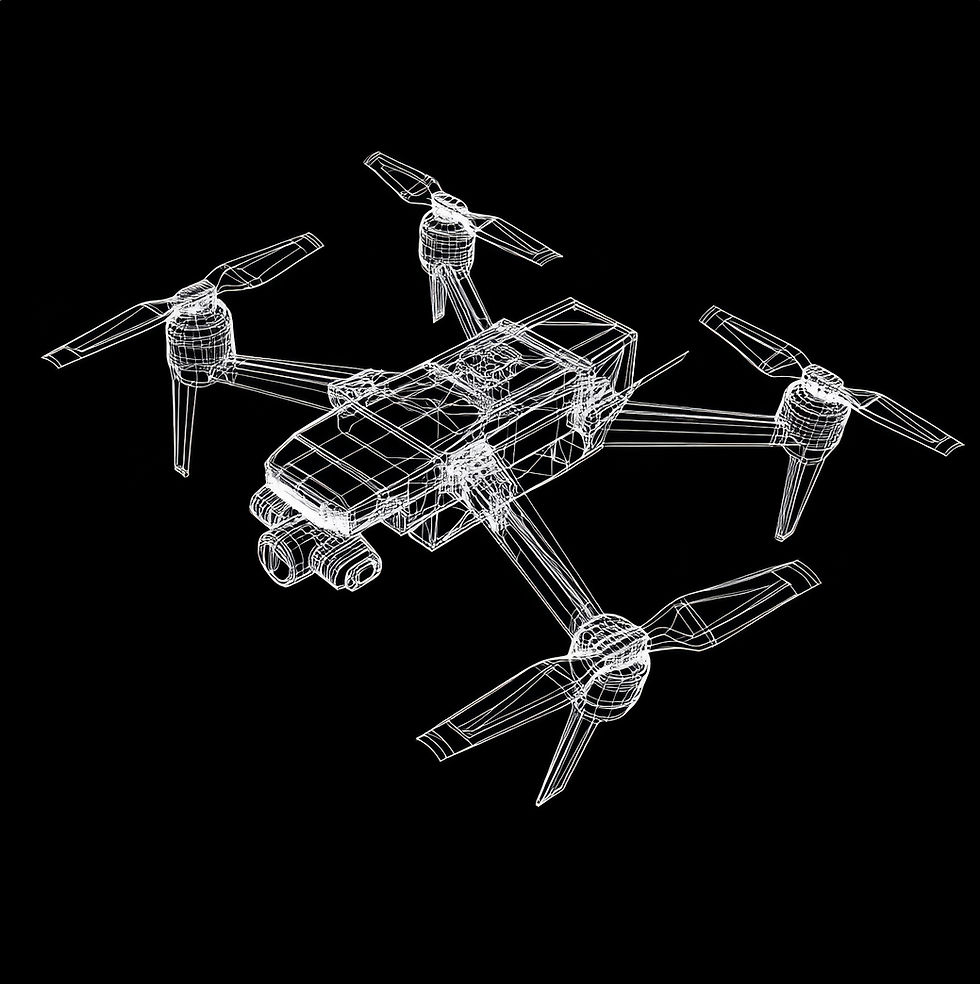
FPV drones are often assembled and upgraded for specific tasks, so choosing the right components directly affects the performance of the finished system. The frame, motors, electronics, power supply, and propellers must all be compatible with one another.
In this article, we will look at the main components for FPV drones, spare parts for drones and their purpose, as well as what to pay attention to when selecting parts for a specific configuration.
FPV Drone Components: What You Need for a Build
A modern FPV drone consists of dozens of components that work as a single unified system. The flight stability, communication range, response speed, and overall durability of the UAV depend on the quality of each element.
The main components are:
Frame
Flight Controller (FC)
Electronic Speed Controller (ESC)
Motors
Propellers
FPV Camera
Video Transmitter (VTX)
Radio Receiver (RX)
Antennas
Battery
GPS Module
Protective and Mounting Accessories
Let us look at each component in more detail.
Carbon Frames for FPV Drones
Carbon frames form the foundation of an FPV drone's structure and determine the placement of motors, electronics, battery, and other components. When choosing a frame, it is necessary to consider its size, weight, carbon plate thickness, and compatibility with other parts.
Popular frame sizes:
3 inches — compact and lightweight models;
5 inches — universal standard for most FPV pilots;
7 inches — for long-range flights (Long Range);
10 inches and larger — for heavy payloads and specialized tasks.
Reinforced frames are recommended for freestyle, while ultra-light structures are preferred for long-range flights. View Carbon Frames for FPV Drones.
Motors and ESCs: The Heart of the Propulsion System
Brushless motors are responsible for the thrust and maneuverability of the drone.
When selecting motors, pay attention to:
Stator size;
KV rating;
Battery type;
Compatibility with propellers.
The ESC (Electronic Speed Controller) controls motor RPM and executes commands from the flight controller.
Modern speed controllers support protocols such as:
DShot300;
DShot600;
DShot1200.
For most 7-inch FPV drones, 45–60 A ESCs are used.
Flight Controller: The Brain of the UAV
The Flight Controller processes sensor data and manages all drone systems.
The most common controllers are built on processors:
F4;
F7;
H7.
For new builds, F7 or H7 are most frequently recommended due to higher performance and support for modern features.
Software plays an important role:
Betaflight;
INAV;
ArduPilot.
The choice of firmware depends on the drone's intended purpose.
FPV Camera and Video Transmitter
The quality of the video feed directly impacts flight comfort and control.
Popular digital systems include:
DJI O4 Air Unit;
Walksnail Avatar;
HDZero.
Analog systems remain relevant due to low latency and affordable pricing.
When choosing a VTX, consider:
Transmitter power output;
Operating frequency;
Compatibility with goggles;
Legal restrictions on radio transmissions.
Batteries for FPV Drones
The battery is one of the most critical elements of any build.
LiPo batteries are most commonly used:
4S;
6S;
8S;
12S.
For standard 7-inch FPV drones, 6S batteries remain the most popular choice.
When selecting a battery, consider:
Capacity;
Weight;
Discharge rate (C-rate);
Cell quality.
A high-quality battery ensures stable voltage even under heavy loads.
Propellers for FPV Drones: Diameter, Pitch, and Blade Count
Propellers for FPV are selected based on diameter, pitch, blade count, motor specifications, and the parameters of a specific propulsion setup. Even changing a single parameter can noticeably affect drone performance.
Main parameters:
Diameter;
Pitch;
Blade count;
Material.
The number of blades affects the load on the propulsion system, thrust characteristics, and overall efficiency. The optimal option depends on the specific drone configuration, motors, and flight mode. Experienced pilots always keep a spare set of propellers, as they are the most consumed element of an FPV drone. View All FPV Propellers.
Control Systems and Receivers
The modern market offers several popular communication protocols:
ExpressLRS;
TBS Crossfire;
FrSky;
FlySky.
Today, ExpressLRS is considered one of the best solutions due to its long range, low latency, and affordable cost. For maximum reliability, it is important to install antennas correctly and avoid shielding them with the carbon elements of the frame.
Additional Components for FPV Drones
In addition to the main components, a quality build may require:
GPS module;
Buzzer for lost drone retrieval;
LED lighting;
Camera protection/mounts;
Cables and connectors;
Action camera mounts;
Telemetry modules.
Such drone parts are selected depending on the application and design of the specific FPV system.
How to Choose Components for FPV Drones
Before buying parts, you should define the primary purpose of the drone:
For Freestyle:
Durable carbon frame;
Powerful motors;
High-quality digital video system.
For Racing:
Minimum weight;
High motor KV rating;
Fastest possible control response.
For Long-Range Flights:
Large propellers;
Energy-efficient motors;
GPS and a powerful radio link.
For Professional Filming:
Stable video system;
Reliable power supply;
Action camera mounting capability.
Properly selected FPV drone components must be mutually compatible in terms of size, electrical parameters, and operating conditions. Before assembly, verify the characteristics of the frame, motors, propellers, ESCs, battery, and electronics as a single system. UDC manufactures drone components in Ukraine, including FPV propellers and carbon frames of various frame sizes. Custom collaboration terms are available for serial orders and UAV manufacturers. View All Drone Components.
статті
Parts for FPV Drones: Selecting Components for Assembly and Upgrades
In this article, we'll take a look at the main components for FPV drones, their purposes, and what to consider when choosing them—for both beginners and experienced pilots.

Other news and articles

статті
September 16, 2026
FPV Component Manufacturing: Modern Technologies, Materials, and Quality Control

статті
June 17, 2026
New FPV headsets: lighter, with a larger screen—but are they comfortable?

статті
May 11, 2026